THANK YOU FOR SUBSCRIBING

Hrtech Outlook Weekly Brief
Be first to read the latest tech news, Industry Leader's Insights, and CIO interviews of medium and large enterprises exclusively from Hrtech Outlook
In the years following the enactment of the Affordable Care Act, employer healthcare moved through a period of readjustment. Premiums rose sharply and the familiar playbook no longer applied. Business owners across New York State began re-examining how their plans were structured and what actually drove their costs. Among those listening closely was financial advisor David Middlemiss. When one of his business clients asked for help designing a healthcare plan, he approached it the only way he knew how—by following the numbers. He soon realized that the existing system operated through opacity, making it difficult for employers to trace how their healthcare dollars were spent. Community-rated plans spread costs evenly across groups, limiting control over pricing. Self-insured plans offered transparency, but put all risk on the employer. In both cases, the structure lacked the balance and insight employers needed to manage benefits intelligently. “My background in finance taught me that transparency brings more discipline into processes, and that changes outcomes,” says Middlemiss. “The healthcare industry is no different. When people understand their risk profiles, they stop reacting to healthcare costs and start preventing them.” That realization led Middlemiss to build something new in the employer benefits category, and Prodigy Benefit Management was established. The firm advocates for preliminary healthcare, bringing financial logic and transparency to employer plans so that care starts before a claim is ever filed. In doing so, it reframes healthcare costs from fixed expenses into variables that can be improved through education, engagement and prevention. That philosophy comes to life through Prodigy’s Paradigm Integrated Healthcare Plan app. It gives employees access to health-risk data once reserved for insurers and connects them to preventive resources through Prodigy’s partnership with U.S. HealthCenter. Within the app, nutrition guidance, behavioral health support and condition-specific coaching converge into a single, adaptive experience that helps employees engage, close care gaps faster and ultimately allows employers to see costs stabilize.
What if 90 percent of your hiring decisions were guaranteed to be right? SmoothHiring delivers that certainty. By embedding AI and predictive analytics into its applicant tracking system, it turns hiring into a forward-looking strategy rather than a reactive process. Every step from defining role requirements to evaluating candidates and onboarding is informed by data patterns that reveal who is qualified and likely to thrive in the role. For recruiters, this means fewer costly mis-hires, stronger alignment between talent and business needs and a hiring function that actively contributes to long-term workforce resilience rather than simply filling vacancies. One of the platform’s most powerful differentiators is its patented behavioral assessment tool, designed with guidance from a Harvard psychometric professor. The algorithm evaluates 16 core personality traits and benchmarks them against the requirements of each role. A sales manager position, for example, may demand leadership, supervisory skills and resilience under pressure, while a customer service role places greater emphasis on empathy and service orientation. Each applicant receives a unique “scorecard fingerprint,” giving employers a clear, objective view of who is most likely to succeed. “By uncovering the human traits that drive performance, our predictive analytics replaces guesswork with science, ensuring every hire is not only qualified but the right fit for the role,” says Srinivas Kethireddy, CEO. The hiring journey begins with SmoothHiring’s AI-powered job description wizard, which generates role-specific postings and salary benchmarks tailored to skills, experience and location. These postings are then distributed across more than 200 major and niche job boards to maximize reach. Once candidates apply, AI-driven video interviews personalize the screening process, giving applicants flexibility to respond on their own time while allowing managers to review responses at their own. Automated workflows manage scheduling, e-signatures and onboarding documentation, allowing recruiters to focus on strategic decision-making rather than administrative tasks. Once applicants begin flowing in, the platform keeps the process structured and transparent. Custom pipelines let recruiters track candidates’ stage by stage, while AI-driven video interviews generate role-specific questions from the job description. Applicants can record their responses on their own time, and managers can review them at their own time. Automated workflows tie it all together, scheduling interviews, managing e-signatures and completing onboarding documentation, so recruiters spend less time on administration and more time engaging with top candidates.
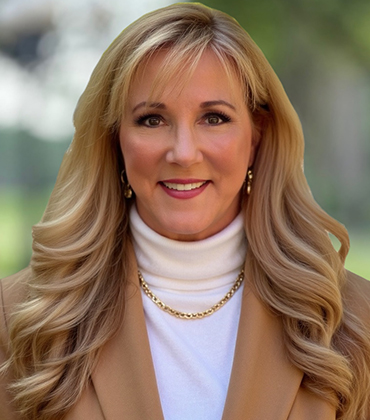
Employers moved from fully insured health plans to self-funding—paying medical claims directly—to gain greater control over costs and plan design, which is needed now more than ever. Wouldn’t it make sense to have that same control over supplemental health plans such as critical illness, accident and hospital indemnity? Now, through Employees First’s model, employers can. Employees First uses a captive structure to bring radical clarity to supplemental health plans— revealing where the dollars are going and the true value of plan designs. These plans, which are predominantly paid for by employees, are intended to reduce out-of-pocket costs during unexpected medical events. Unfortunately, most premium dollars have traditionally fed industry profits instead of paying employees’ claims. Under the Affordable Care Act (ACA), supplemental health plans must remain fully insured, making it difficult for employers to see where the dollars go. This lack of visibility creates a blind spot in both cost control and the plan’s true value to employees. Employees First’s solution enables fully insured plans to operate with the transparency and control of self-funded plans. Employers can now see where every penny goes. They can also reinvest surplus dollars to enhance benefits or reduce employee contributions, often without changing brokers, plan administrators or disrupting the employee experience. “Fully insured plans can create a veil of obscurity which reduces employers’ visibility of where the dollars go. Our model guarantees employers will have full transparency of every penny of employee-paid premiums,” says Amy Hollis, founder & CEO. Employees First also supports employers in meeting their fiduciary obligations across overarching plan management. All costs in the model are capped and disclosed, and employers gain full visibility into the flow of funds, ensuring every dollar not used for claims is accounted for and reinvested back into employee benefits. Clients also gain access to the company’s proprietary plan-modeling tool, which delivers customized, data-driven insights for supplemental health plan design. For the first time, supplemental health plan value can be weighted using actuarial standards—which is an industry first.
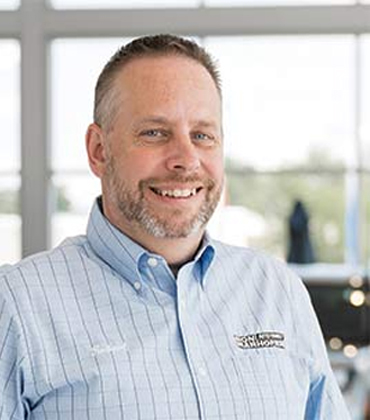
Robert Hamer is the Chief Human Resources Officer at Ron Marhofer Auto Family, a role he assumed in 2023 after joining as HR Director in 2019. He oversees HR strategy for more than 400 employees and leads initiatives that combine technology with people-focused leadership to build a culture of inclusion, growth, and high performance. Hamer believes empowered employees create exceptional customer experiences. He has introduced advanced HR systems, automation tools, and digital platforms that place employees in control of their work journey while driving engagement and innovation. His career spans over two decades, including HR leadership at Vista Windows and 20 years at Home Depot in human resources and operations management. This experience shaped his expertise in aligning workforce development with organizational strategy at scale. Beyond his corporate role, Hamer serves on Ashland University’s engineering leadership board and the board of advisors for Opportunities for Ohioans with disabilities. He has chaired fundraising initiatives for nonprofit organizations and frequently shares his expertise as a guest lecturer and commencement speaker. Following is the conversation that we had with him. A Century-Old, Family-Owned Business Ron Marhofer Auto Family has been part of northeast Ohio for over a century. What started as a small service garage in 1919 has grown into a multi-location automotive retailer led today by the third generation of the Marhofer family. Few family businesses make it this far, statistics show only about 12 percent do, but our longevity proves that putting people first creates staying power. We’re not just selling cars but building trust and long-term relationships with employees, customers, and the communities around us. This legacy runs deep. Many of our team members are second, third, and even fourth-generation employees. My family is part of that story, my daughter, son, niece, and nephew have all worked here at diff

Melanie Berman serves as Executive Vice President of Administration and Chief Human Resources Officer at NiSource Inc., where she leads organizational alignment, employee engagement and a values-driven culture that supports the company’s strategic goals. With more than 30 years of HR leadership experience—including senior roles at The Michaels Companies, Anthem and BakerCorp—she also contributes her time and expertise to the Center for Energy Workforce Development board and the Ohio State University Corporate Advisory Council. This feature highlights Melanie Berman’s leadership journey and her strategic approach to workforce transformation in a regulated utility environment. She shares insights on building a pay-for-performance culture and fostering a collaborative HR partnership to support NiSource’s mission of delivering safe, reliable energy that drives value for our customers. A Journey into HR Leadership My HR career spans over three decades across nearly every major industry except financial services. I’ve worked in global corporations, private equity-backed firms, small businesses and Fortune 25 companies. A common thread throughout has been transformation: helping organizations navigate change and designing structures that enable them to thrive.
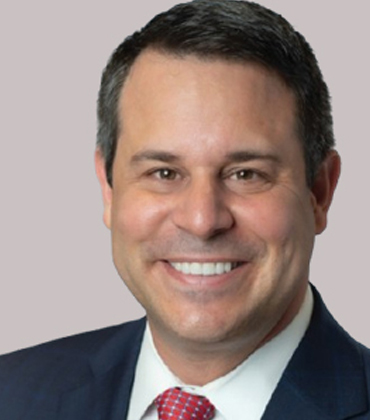
Doug Dureau is a visionary HR leader with nearly 30 years of experience, serving as CHRO at Hillwood and the Perot companies. Combining deep HR expertise, cross-industry insight and technology acumen, he drives culture, talent and innovation. A lifelong learner with an MBA and a focus on AI, he shapes the future of work. Through this interview, Dureau highlights the importance of integrating psychology, business and technology to shape culture, drive leadership development and enhance organizational performance. He emphasizes reducing friction, fostering engagement and evolving HR practices to support both employees and business success. Psychology Shaping Culture: Embedding Values Through Strategy My background in psychology has shaped the way I lead and communicate throughout my career. In my early work in clinical psychology, I facilitated groups and managed an employee hotline. Screening calls taught me how to listen for tone, mirror language and communicate intent with clarity. Later, in HR, those same skills became essential for building trust and addressing sensitive matters. Psychology has consistently informed my understanding and approach to engaging with people in the workplace.

Patrick Yearout, FMP, CHT, Director of Innovation, Recruiting, and Training, Ivar’s Restaurants

Emily Gambacorta, Employee Engagement and Experience, Central Hudson
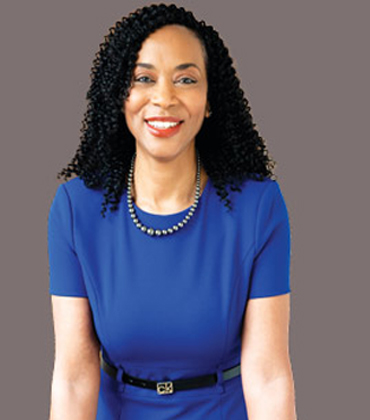
Monica Melancon, Chief Human Resource Officer, Wyndham Hotels & Resorts

Kyle Plett, Director of People and Culture, Car Toys

Carolyn Tandy, SVP, Chief Diversity, Equity and Inclusion Officer, Humana
Employer wellness platforms support workforce health, enhance engagement, and contribute to measurable business outcomes through personalization, culture development, and strategic alignment with organizational objectives.
Behavioral economics mechanisms, including nudges, defaults, and education, will optimize utilization and support wellbeing.
The Workplace Is Reading You and That’s Not Entirely Bad
Skills-based hiring platforms now map internal talent with the precision once reserved for external recruiting, surfacing lateral moves and stretch opportunities that managers routinely miss. It’s about recognizing capability before credentials. Compensation transparency mandates have compelled real-time pay equity analytics to become transparent, transforming what was previously opaque into something employees can actually verify.
Wellness platforms have evolved past step counts into something more unsettling: they detect patterns in communication cadence, meeting density and after-hours activity that correlate with burnout. A shift in Slack response times or calendar fragmentation becomes a data point. The question isn’t whether this works; it does. The question is whether employees trust the intent.
Financial wellness tools now integrate directly with payroll, offering on-demand pay and predictive budgeting that respond to actual spending patterns, not generic advice. Four-day work week experiments are being tracked with the rigor of clinical trials.
The global HR technology market is projected to reach $69.6 billion by 2033, growing at 7.6 percent.
For better or worse, the workplace now has a pulse and it’s reading yours.
The magazine features a thought-provoking article by Patrick Yearout, FMP, CHT, Director of Innovation, Recruiting and Training at Ivar’s Restaurants, offering practical, experience-driven guidance for hospitality leaders choosing the right technology vendors for their business. It also includes an article by Carolyn Tandy, SVP and Chief Diversity, Equity and Inclusion Officer at Humana, in which she explains how creating a culture of belonging requires honoring diverse voices, setting shared goals and developing leaders who show up with empathy and fairness.
The publication also spotlights Prodigy Benefit Management as the cover story for its ability to help employers control healthcare costs through education, transparency, and prevention, leading to healthier outcomes and sustainable savings.
We hope this edition offers insights that help industry leaders and CHROs strengthen their hiring, support, and care for their people, and enable them to build a resilient workforce prepared for what comes next.