
THANK YOU FOR SUBSCRIBING

Hrtech Outlook Weekly Brief
Be first to read the latest tech news, Industry Leader's Insights, and CIO interviews of medium and large enterprises exclusively from Hrtech Outlook
What challenges do HR professionals face in unemployment cost management? HR professionals looking for support with Unemployment Cost Management (UCM) face familiar pressures, including managing compliance risk, controlling costs, and gaining visibility in a highly regulated, constantly changing environment. For more than three decades, Thomas & Company has served as a trusted partner in the UCM space, helping employers reduce administrative burden while delivering measurable results through a powerful combination of human expertise and technology. Rooted in a client-first mindset built on precision, trust, and long-term accountability, the company remains focused on enabling success for employers and stakeholders. As the company expanded beyond UCM, it followed a clear principle: grow only when expansion strengthens client value. This approach shaped Thomas & Company’s evolution into a broader suite of employer services supporting an interconnected ecosystem of employers, employees, government agencies across all 53 jurisdictions, verifier communities, and internal client teams. By staying close to client needs and building long-term partnerships, Thomas & Company expanded into additional services, including Employment and Wage Verifications (EWV), Work Opportunity Tax Credits (WOTC), and Employer Tax Services (ETS). Together, these solutions help employers of all sizes reduce administrative burden, improve compliance, control costs, and generate ROI without sacrificing the high-touch service the company is known for. “Our focus is building tangible and sustainable value for all stakeholders,” says Nate Kenney, CEO. “That discipline allows us to expand thoughtfully without losing sight of the people and processes at the center of employer services.”
New Level Work was born from a desire to solve a challenge that countless professionals face every day—poor workplace management. After years of working in Silicon Valley, founder Stéphane Panier saw firsthand how ineffective leadership stifled innovation and growth. As a seasoned executive, he worked with teams across various industries and noticed a recurring pattern: managers were often promoted based on their proficiency as individual contributors rather than leadership ability, leaving them ill-equipped to inspire, guide, and develop their teams. This experience inspired him to create a leadership development company that would address these gaps while making a broader social impact. Panier envisioned a solution that would not only provide executives with the tools to succeed but also help organizations foster a culture of continuous learning and high performance. The company started with a traditional coaching model, offering personalized one-on-one support to managers and executives. This approach proved highly effective, and as demand grew, the team recognized an opportunity to scale their impact across multiple organizations. The in-person coaching proved to be highly effective, so to provide scale and reach, it was integrated with technology. The result was a powerful combination of personalized human support and AI-driven solutions—meeting the demands of modern workplaces without sacrificing quality. Innovation at the Core New Level Work’s strength lies in its ability to blend human coaching, structured training, and advanced AI. This combination provides organizations with a holistic, scalable solution that delivers measurable outcomes globally. “We tailor our leadership programs to meet the specific needs of each organization, ensuring that leaders at every stage of their journey receive relevant and impactful guidance,” says Panier. At the center of this innovation is Leora, New Level Work’s AI-powered leadership development platform. Designed to complement traditional coaching, Leora offers real-time guidance, helping leaders navigate daily challenges with confidence. It enhances the overall experience by providing continuous support and delivering immediate, personalized insights to improve communication, manage teams, and make strategic decisions. The impact of this approach is reflected in the company’s high Net Promoter Scores, signaling strong customer satisfaction and tangible results. By combining human insight with AI capabilities, New Level Work empowers organizations to develop leaders who can adapt, grow, and succeed in an everchanging business environment.


What if 90 percent of your hiring decisions were guaranteed to be right? SmoothHiring delivers that certainty. By embedding AI and predictive analytics into its applicant tracking system, it turns hiring into a forward-looking strategy rather than a reactive process. Every step from defining role requirements to evaluating candidates and onboarding is informed by data patterns that reveal who is qualified and likely to thrive in the role. For recruiters, this means fewer costly mis-hires, stronger alignment between talent and business needs and a hiring function that actively contributes to long-term workforce resilience rather than simply filling vacancies. One of the platform’s most powerful differentiators is its patented behavioral assessment tool, designed with guidance from a Harvard psychometric professor. The algorithm evaluates 16 core personality traits and benchmarks them against the requirements of each role. A sales manager position, for example, may demand leadership, supervisory skills and resilience under pressure, while a customer service role places greater emphasis on empathy and service orientation. Each applicant receives a unique “scorecard fingerprint,” giving employers a clear, objective view of who is most likely to succeed. “By uncovering the human traits that drive performance, our predictive analytics replaces guesswork with science, ensuring every hire is not only qualified but the right fit for the role,” says Srinivas Kethireddy, CEO. The hiring journey begins with SmoothHiring’s AI-powered job description wizard, which generates role-specific postings and salary benchmarks tailored to skills, experience and location. These postings are then distributed across more than 200 major and niche job boards to maximize reach. Once candidates apply, AI-driven video interviews personalize the screening process, giving applicants flexibility to respond on their own time while allowing managers to review responses at their own. Automated workflows manage scheduling, e-signatures and onboarding documentation, allowing recruiters to focus on strategic decision-making rather than administrative tasks. Once applicants begin flowing in, the platform keeps the process structured and transparent. Custom pipelines let recruiters track candidates’ stage by stage, while AI-driven video interviews generate role-specific questions from the job description. Applicants can record their responses on their own time, and managers can review them at their own time. Automated workflows tie it all together, scheduling interviews, managing e-signatures and completing onboarding documentation, so recruiters spend less time on administration and more time engaging with top candidates.

Liane George, Vice President, Human Resources (CHRO), United Launch Alliance (ULA)

Damon J. Porter, Senior Vice President, Chief Human Resources Officer, Grange Insurance

Quentin SaLay, Vice President Human Resources, Comcast [NASDAQ:CMCSA]

Allie Ferrara, MSHRM, SHRM-SCP, Sr. Director, HR Business Partner, Danone

Ericca Nolan, Human Resources Director, Core & Main [NYSE: CNM]
Unemployment cost management reduces financial risk, strengthens workforce strategy, improves compliance, and enhances long-term organizational resilience.
Unemployment cost management controls tax exposure, reduces claims, improves compliance, strengthens workforce stability, and protects long-term organizational financial performance.
Strengthening Control and Accountability in Employer Services
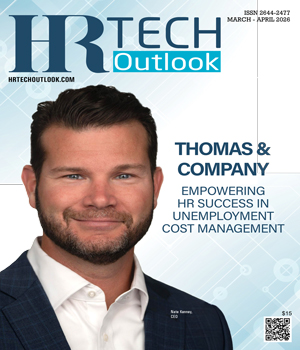
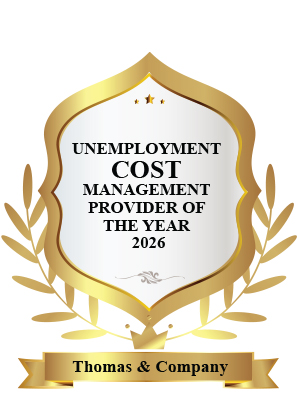
At the center of this issue, Thomas & Company, recognized as Unemployment Cost Management Provider of the Year 2026, exemplifies this transition through operational rigor rather than incremental enhancement. With more than three decades of experience, the firm has built an interconnected employer services ecosystem spanning unemployment cost management, employment and wage verifications and employer tax services. Engagements begin with a structured workflow analysis that quantifies administrative burden and opportunity costs, followed by realigning internal bandwidth through expert-led delivery. Its SHIELD platform consolidates visibility and cross-service communication, aligning technology with real HR, payroll and tax workflows rather than adding fragmented tools. Continuous performance metrics and stakeholder feedback reinforce a culture where accountability is operational, not rhetorical.
Leadership insight in this issue underscores that people’s strategy must operate with the same structural discipline. Ericca Nolan, Human Resources Director at Core & Main [NYSE: CNM], advances succession planning and change agility as embedded business practices, directly linking development to future customer and organizational demands. Her approach positions HR as a strategic operator aligned to measurable outcomes.
Reinforcing this operational lens, Quentin SaLay, Vice President Human Resources at Comcast, emphasizes that crisis performance depends on preparation supported by visible, coordinated leadership and controlled communication cadences.
As HR continues to expand its mandate, the differentiator is clear: integrated systems, quantified outcomes and accountable leadership define enterprise-grade employer services. We encourage readers to examine the models presented in this issue and evaluate how operational discipline can elevate their own HR strategies.