THANK YOU FOR SUBSCRIBING

Hrtech Outlook Weekly Brief
Be first to read the latest tech news, Industry Leader's Insights, and CIO interviews of medium and large enterprises exclusively from Hrtech Outlook

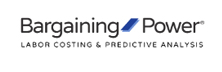
 Betsy Cagan, President and Founder
Recognizing the limitations of spreadsheets and finding no solution in the marketplace, labor negotiator Betsy Cagan developed Bargaining Power® more than three decades ago to provide organizations with a more accurate way to evaluate labor costs. To cost compensation, benefit contributions, time-off allowances and work rules, Bargaining Power® software creates a dynamic simulation of the workforce itself. Using employee data imported from HRIS systems, the software creates the workforce simulation that projects how employee costs change over time. It applies user-specified turnover rates and tracks workforce changes, allowing firms to evaluate proposals considering evolving demographic conditions.
“The spreadsheets we see are very cumbersome. Even the most sophisticated models can’t compete with compiled software. We developed Bargaining Power® to provide a comprehensive and intuitive solution,” says Cagan, president and founder.
The platform's value lies in its ability to reveal costs that are not identified through traditional approaches. In addition to accounting for workforce aging and turnover, the software evaluates the operational impact of changes to holidays, vacation allowances, sick leave, and other paid time-off provisions, including the cost of replacing lost productive time through overtime or workforce adjustments. It also accounts for interactions among contract provisions, helping organizations understand how changes in one area can affect expenditures elsewhere in an agreement and develop a more accurate understanding of bargaining-proposal costs.
The practical value of that approach was evident in a large, complex bargaining environment. An aerospace and defense customer previously spent six to twelve months building and debugging spreadsheet models that often had to be recreated for new negotiations. By adopting Bargaining Power®, the client gained enhanced insight costing capabilities that were impossible to replicate through internally-developed model. In their analysis, the organization estimated that the software eliminated their model rebuilding and debugging effort, generating staffing savings of $100,000 to $200,000. When training efficiencies and other operational benefits were factored in, the customer estimated total savings of nearly $500,000. Such outcomes helped Bargaining Power earn recognition as the Top Labor Costing and Workforce Analytics Software 2026.
As labor agreements continue to evolve, Bargaining Power remains focused on helping businesses accurately evaluate labor agreements and negotiation proposals. More than three decades after its founding, the company's core objective remains unchanged: helping organizations understand the true cost of proposed agreements, evaluate economic trade-offs, and approach negotiations with greater confidence.
What Is Labor Costing and Workforce Analytics Software?
Labor Costing and Workforce Analytics Software helps organizations understand how compensation, work rules, benefits, staffing levels, and operational decisions affect labor costs. Rather than relying on spreadsheets, it enables users to model multiple scenarios, compare financial outcomes, and make data-driven workforce decisions. These capabilities improve planning accuracy, support budgeting, and provide greater visibility into the financial impact of workforce changes.
How Does Bargaining Power® Deliver Labor Costing and Workforce Analytics Software?
Bargaining Power® demonstrates the value of Labor Costing and Workforce Analytics Software through a platform designed specifically for complex labor cost analysis. Originally developed by an experienced labor negotiator and refined over more than three decades, the software models compensation plans, work rules, benefits, paid leave, turnover, and workforce scenarios that are difficult to analyze with conventional spreadsheets. It also generates customizable reports that support collective bargaining, annual budgeting, workforce planning, and operational decision-making across organizations ranging from hundreds to more than 100,000 employees.
What Capabilities Should Organizations Look for in Workforce Cost Analysis Solutions?
When evaluating Labor Costing and Workforce Analytics Software, organizations should prioritize flexible scenario modeling, accurate labor cost projections, workforce planning capabilities, customizable reporting, and the ability to analyze the interaction between multiple workforce variables. Solutions that consolidate complex calculations into a single analytical environment help improve decision-making, reduce manual effort, and provide consistent financial insight for both routine planning and high-impact workforce changes.
How Does Labor Costing Software Improve Workforce Planning?
Labor Costing and Workforce Analytics Software supports workforce planning by allowing organizations to evaluate different staffing, compensation, and operational scenarios before decisions are implemented. Instead of reacting to changing labor costs after they occur, organizations can forecast financial outcomes, compare alternatives, and identify cost drivers in advance. This approach improves budgeting, strengthens financial planning, and helps align workforce strategies with broader business objectives.
Why Is Bargaining Power® Well Suited for Complex Labor Cost Analysis?
Bargaining Power® is designed to address workforce calculations that extend beyond standard HR reporting. Its Labor Costing and Workforce Analytics Software models intricate contract provisions, changing workforce demographics, service-length impacts, benefit contributions, and operational assumptions within a unified platform. By allowing users to test multiple proposals simultaneously and immediately understand their financial implications, it supports informed decision-making in labor negotiations, budgeting, workforce sizing, and long-term planning.
Why Is Labor Costing and Workforce Analytics Becoming More Important?
As organizations face rising labor costs and increasing workforce complexity, Labor Costing and Workforce Analytics Software has become an essential planning tool rather than simply a reporting system. Modern organizations increasingly depend on workforce analytics to improve forecast accuracy, strengthen financial governance, evaluate workforce scenarios, and support strategic decisions with reliable data. Solutions that combine detailed labor costing with actionable analytics help organizations respond more confidently to changing business conditions while improving long-term workforce planning.
Company
Bargaining Power
Management
Betsy Cagan, President and Founder
Description
Bargaining Power is a labor costing software company that helps organizations evaluate the financial impact of collective bargaining agreements. Designed specifically for unionized environments, the platform enables employers to model workforce changes, analyze contract proposals, and forecast employee costs with greater accuracy than traditional spreadsheet-based approaches.